Batch Change Handling
Overview
SynchDB periodically fetches a batch of change request from Debezium runner engine at a period of synchdb.naptime milliseconds (default 100). This batch of change request is then processed by SynchDB. If all the change requests within the batch have been processed successfully (parsed, transformed and applied to PostgreSQL), SynchDB will notify the Debezium runner engine that this batch has been completed. This signals Debezium runner to commit the offset up until the last successfully completed change record. With this mechanism in place, SynchDB is able to track each change record and instruct Debezium runner not to fetch an old change that has been processed before, or not to send a duplcate change record.
Batch Handling
SynchDB processes a batch within one transaction. This means the change events inside a batch are either all or none processed. When all the changes have been successfully processed, SynchDB simply sends a message to Debezium runner engine to mark the batch as processed and completed. This action causes offsets to be committed and eventually flush to disk. An offset represents a logical location during a replication similar to the LSN (Log Sequence Number) in PostgreSQL.
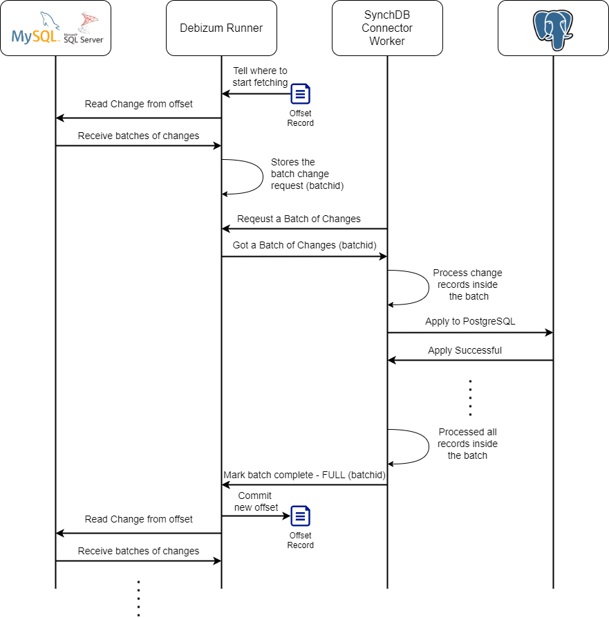
If a batch of changes are partially successful on PostgreSQL, it would cause the transaction to rollback and SynchDB will not notify Debezium runner about batch completion. When the connector is restarted, the same batch will resume processing again.
Batch Handling for Openlog Replicator Connector
Since Openlog Replicator Connector does not rely on Debezium to orchestrate batches of change events, its batch processing is determined purely on the OLR client's raw read buffer size (configured by GUC synchdb.olr_read_buffer_size). The client tries to read as much data as possible from the socket, which could compose of multiple change events. However many "complete" change events appear in the read buffer are considered in the same batch and will be executed in the same PostgreSQL transaction. If the read buffer contains incomplete change event, it will not be considered in the current batch. It is expected that in the next read, the remaining data of this incomplete change event will arrive and will be part of the next batch of change events.
So, increasing the value of synchdb.olr_read_buffer_size increases the batch size.